Our approach to early learning
Children learn through play, relationships, conversation, exploration and meaningful everyday experiences. Our role is to understand what each child already knows, build on their interests and help them develop the knowledge, skills and confidence they need for their next steps.
Our curriculum
What we want children to learn
We follow the Early Years Foundation Stage (EYFS), the framework every registered early-years setting in England works to. Within it, our curriculum starts with each child: we notice what fascinates them and build on it, while making sure they develop the knowledge and skills they need for their next steps.
- Communicating their needs, ideas and feelings
- Forming secure relationships with adults and other children
- Growing independence and looking after themselves
- Developing physical confidence, indoors and outdoors
- Becoming curious, engaged learners
- Building early foundations for reading, writing and mathematics
- Understanding the world around them
- Expressing themselves creatively through art, music, role play and movement
Every child develops at their own pace, so these are the aims we work towards together rather than fixed targets.
Learning in action
How children learn here
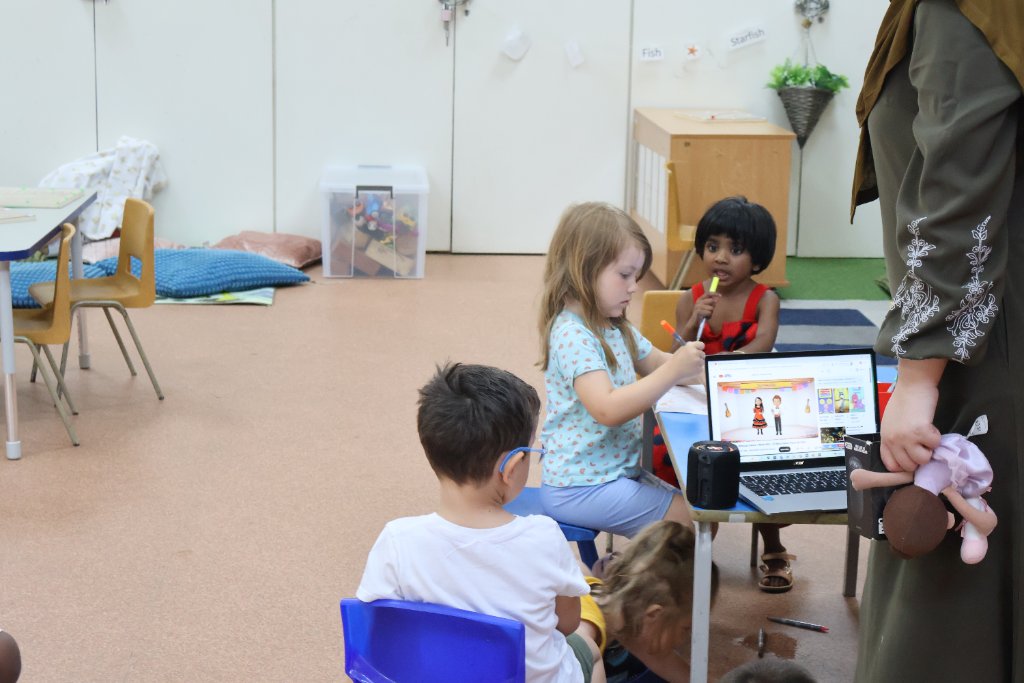
Our practitioners are right beside the children: listening, observing and gently extending their play.
Through play
Through relationships
Through language and conversation
Through exploration
Indoors and outdoors
The Early Years Foundation Stage
The seven areas of learning
The EYFS is organised into seven areas of learning. Three prime areas are the foundations for everything else, and four specific areas build on them.
Prime areas
Communication and Language
Listening, understanding and talking. Strong communication helps children share ideas, make friends and learn in every other area.
Personal, Social and Emotional Development
Feeling confident, building relationships and understanding feelings, which helps children feel secure enough to learn.
Physical Development
Moving with confidence and control, from running and climbing to using tools and holding a crayon, along with healthy habits and self-care.
Specific areas
Literacy
Enjoying books, stories and rhymes, and early mark-making.
Mathematics
Exploring numbers, shapes, patterns and measuring through play.
Understanding the World
Finding out about people, communities, nature and the world around them.
Expressive Arts and Design
Art, music, dance, role play and making things.
Your child's key person
A key person who knows your child well
- Every child has a key person, a practitioner who settles them in the morning and is your first point of contact.
- They build a close relationship with your child and with you.
- They observe your child through everyday play to understand how they are developing.
- They help identify the next steps that are right for your child.
Observation and next steps
Understanding your child's development
We learn about children by spending time with them. Most of what we notice comes from ordinary moments: play, conversation, snack time and time outdoors.
Watching and listening
Practitioners observe children naturally during everyday play, conversations and routines.
Understanding what your child can already do
We notice what each child can do, what interests them and where they may need more support.
Planning next steps
We use what we learn to plan experiences that help each child take their next steps.
We share photos, observations and next steps with you through Famly, our secure online learning journal.
Every child develops in their own way
Children develop at different rates and in different ways. If your child may need additional support, we work closely with you to understand their needs and agree how best to help.
Read about our SEND SupportWorking together
You know your child best
Parents and carers bring essential knowledge about their child. When you share it with us, we can help pre-school feel consistent with home.
- Routines
- Interests
- How your child communicates
- Family experiences
- Changes at home
Your child's key person uses what you share to support their wellbeing and learning, and we share what we notice at pre-school with you.
How we help children settle inLooking ahead
Getting ready for school
Being ready for school is about much more than writing a name or sitting still. Through everyday play and routines, we help children build the skills and habits that support a positive start, including sharing, listening, managing feelings and a love of books.
- Communication
- Confidence
- Independence
- Relationships
- Self-care
- Curiosity
- Listening and attention
- Early literacy and maths foundations
A typical day
The rhythm of our day
A familiar routine helps children feel secure and know what comes next. On Wednesdays we close at 2:00pm, so home time is at 2:00pm.
- 8:30Arrival
- 9:00Circle time
- 9:30Focus activities
- 9:45Tidy up time
- 10:00Snack time
- 11:30Story / singing time
- 12:00Home time / lunch time
- 1:00Free flow inside & outside
- 1:30Focus activities
- 2:00Home timeWednesdays only
- 2:00Music & dance sessionMon, Tue, Thu & Fri
- 2:30–3:00Free play and collectionMonday, Tuesday, Thursday and Friday
See our approach in action
Come and see how our environment, routines and team support children's learning through everyday play and experiences.